
The first cost dashboard for an enterprise AI agent often reports input tokens, output tokens, and model charges. Those numbers are useful, but they do not answer the business question: What does it cost to complete a task correctly? An agent that makes one inexpensive model call and fails half its assignments may cost more per usable outcome than an agent that makes five calls and usually succeeds. The unit of analysis should therefore be a verified business result, not merely an inference request.
Why token pricing is an incomplete metric
Agent workflows combine model inference with retrieval, searches, tools, software execution, storage, and sometimes human approval. Each activity can create expense or delay. Token charges may fluctuate with context length, retries, caching, the model selected, and output size. AWS’s Bedrock cost guidance explicitly distinguishes aggregated billing from per-request token data and recommends combining billing attribution with model invocation logs for detailed analysis [1].
Counting model calls is necessary for cost control, but an uncompleted claim review or unresolved support case delivers no corresponding business benefit. This is why the FinOps Foundation frames unit economics around connecting technology spending with the value it creates [2].
Define a successful unit of work
Start with an explicit outcome such as a validated invoice posted, a support ticket resolved without reopening, or a software change that passes review and deployment controls. Specify what counts as success, the observation window, and how partial completions and escalations are handled. Otherwise teams can improve the reported metric simply by redefining a task.
For an invoice-processing workflow, distinguish three events: the agent submitted a proposed entry; a downstream control accepted it; and the entry remained correct after reconciliation. The second or third may be the appropriate denominator, depending on the use case. The denominator should never be chosen solely because it produces an attractive cost figure.
Build a cost ledger across the full workflow
Allocate costs to a stable workflow ID, business unit, and task ID. Record model and tool invocations, input and output usage, cache activity, retrieval charges, document processing, queueing, observability, and human intervention. Add shared platform expense using a documented allocation rule. For security, avoid logging raw confidential prompts where metadata and counts will suffice.
AWS documents per-request metadata tags and notes that estimates built from invocation logs are not necessarily invoice-accurate: negotiated discounts, commitments, and provisioned throughput may change the final amount [3]. Reconcile the detailed ledger to the provider bill and state which elements are estimates.
Practical metric: cost per verified completed task = (attributable model + tool + platform + human-review costs) divided by the number of verified successful tasks in the same period. Also report cost per attempted task and percentage completed, so changes in success rates remain visible.
Measure the waste inside agent loops
Most teams quickly notice expensive outputs; fewer measure the cost of repeated planning, failed tool calls, stale retrieval results, and unnecessary rechecking. Track calls per task, retries per success, failures by tool, escalation rate, and median versus upper-percentile cost. Those distributions matter because rare runaway loops can dominate operating expense.
Set explicit limits for maximum steps, model retries, tool spend, and runtime. An exceeded limit should produce a controlled handoff, not an invisible failure. Compare the cost of those limits with the business consequence of abandoning a task too early.
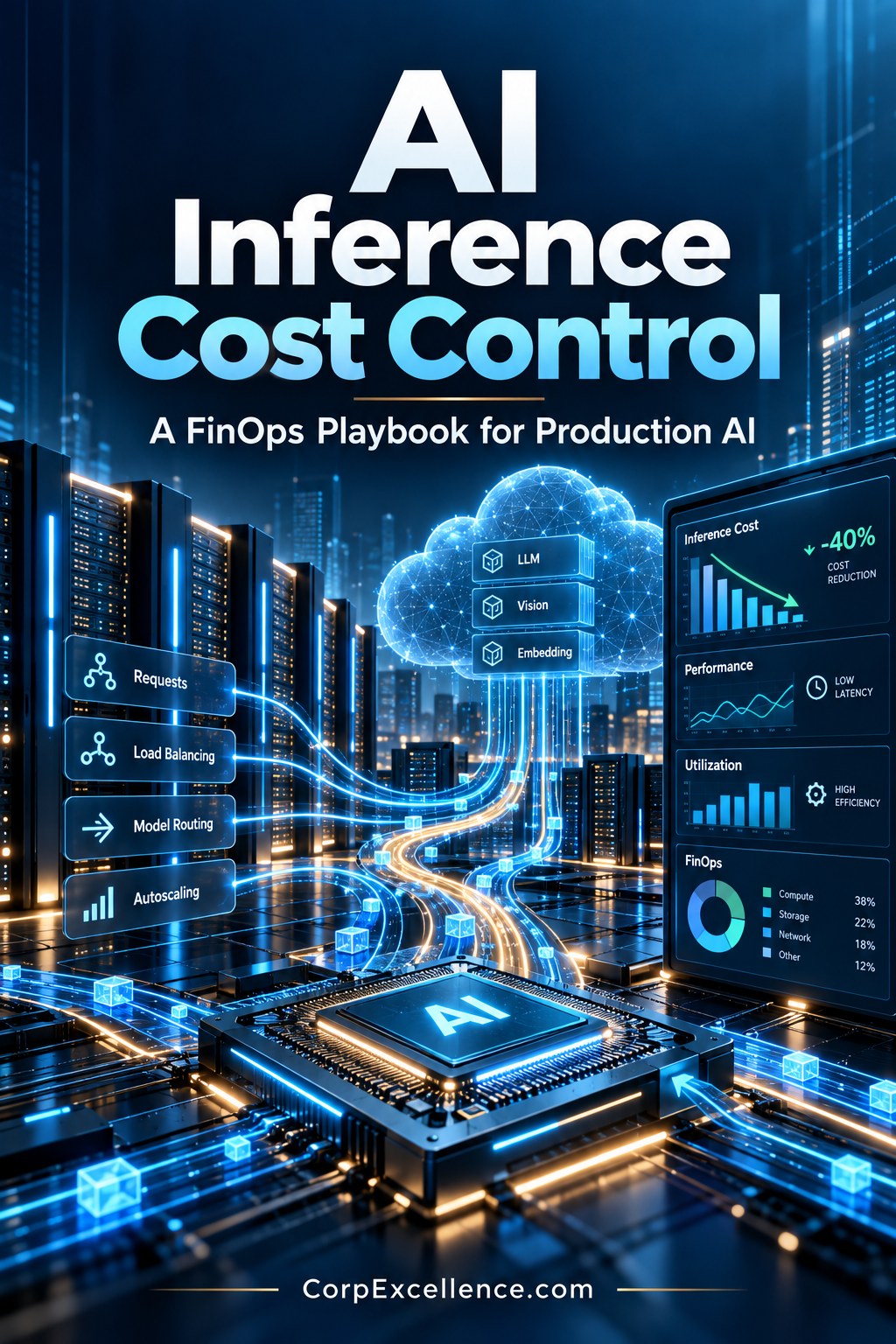
RECOMMENDED PAID RESEARCH REPORT
AI Inference Cost Control
A practical FinOps playbook for estimating cost per successful AI task, allocating inference spending, and putting model-routing and spending controls into operation.
Use a two-axis evaluation, not a cheaper-model contest
A routing change that reduces spend but increases errors or reviewer workload may destroy net value. Evaluate candidates by verified task success and all-in cost per success. Add latency and security as constraints, rather than hiding them inside a single composite score. Run the comparison on representative tasks of different complexity and repeat it when models, prompts, or tool chains change.
For example, a small model may excel at routing tickets but struggle with a multi-document regulatory assessment. A mixed workflow can route simple cases cheaply and send complex cases to a more capable model. The engineering question becomes which routing policy maintains an acceptable outcome threshold at the lowest total cost.
What a leadership dashboard should show
A useful monthly view separates volume, verified success rate, cost per successful outcome, human review minutes, and the distribution of task costs. Display the same measures by application, business owner, and model version. Add a trend for exceptional costs and the causes behind them; these often reveal architectural issues that average token costs conceal.
This operating discipline connects directly to CPX’s AI Cost Management research hub, its analysis of the economics of AI in IT, and the Model Evaluation & Monitoring topic.
Bottom line
Token costs tell you what a provider charged. Outcome costs tell you whether the application is economically useful. Reliable agent economics requires both an accurate cost ledger and a defensible definition of success. Without those two elements, scaling activity can easily be mistaken for scaling value.
Leave A Comment