From Predictable Programs to Probabilistic Systems: What Changes When Software Uses AI?
When learned behavior enters the decision path, the basis for trusting an output changes. Here is how to design, test, and support it.


When learned behavior enters the decision path, the basis for trusting an output changes. Here is how to design, test, and support it.
A faster draft matters only in relation to the reviews, dependencies, and operational consequences around it. Follow AI through the full lifecycle.
A model is one component. Six readiness questions turn a promising demo into a service that keeps working in production.
Separate the components of an enterprise AI application by responsibility to make architecture and buying decisions clearer.
An assistant that drafts an email and a system that sends it do not have the same authority. Define what an agent may decide and do.
Time saved, capacity released, and money saved are different outcomes. A credible AI investment case explains the connection.
Trust in an AI service requires examining correctness, protection, and accountability separately, with evidence that boundaries are enforced.
Tools change tasks, but employers decide how roles, staffing, and training respond. Here is how to read the evidence on IT careers.
The goal is not to master every new tool but to become better at delivering and evaluating work as the tools change.
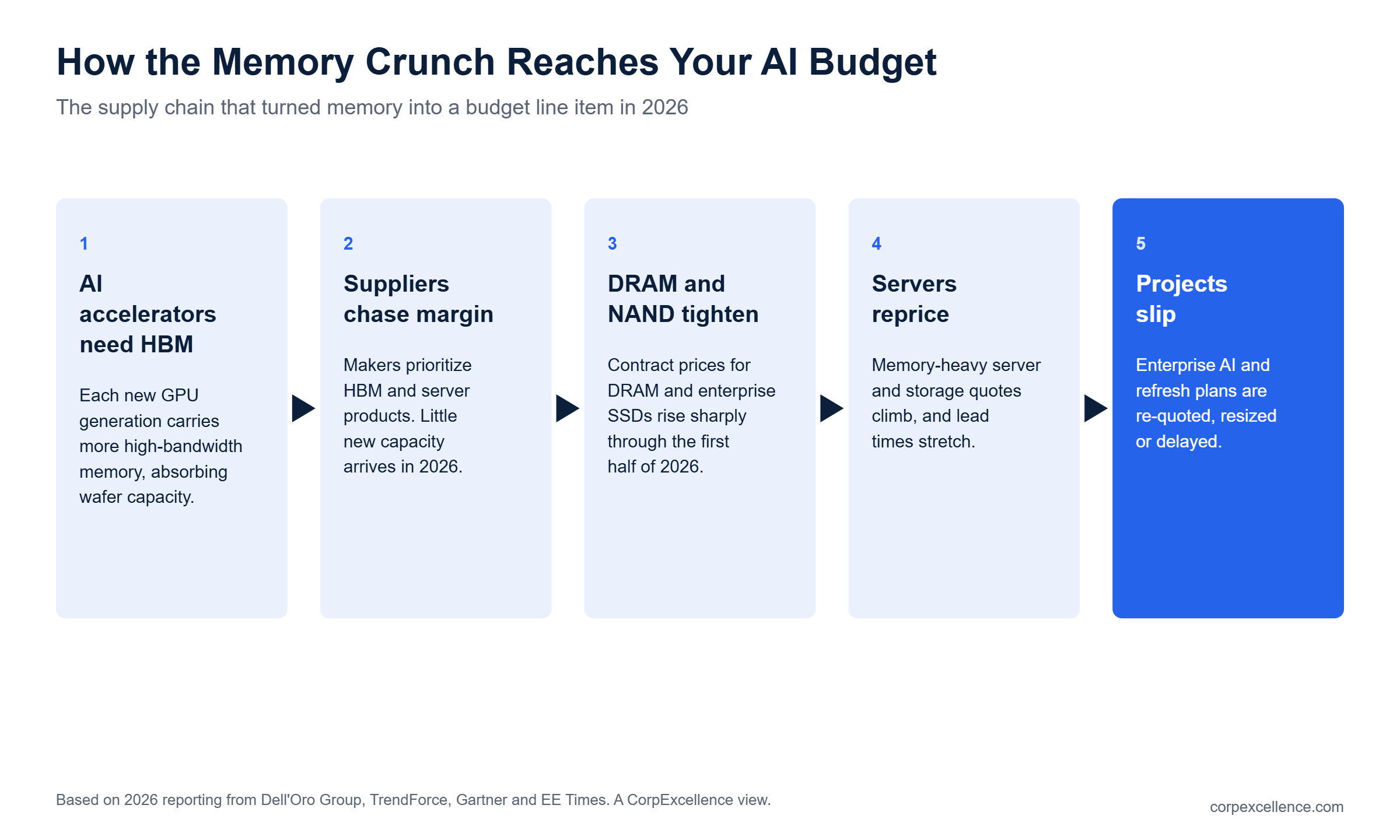
Memory has become one of the most volatile lines in the AI infrastructure budget. How the 2026 shortage happened, how long it may last, and a procurement playbook for CIOs.